Judicious imitation means smartly copying or taking inspiration from existing ideas, styles, or works, but adapting and blending them to create something new and original, rather than just making a direct, unthinking replica. It’s the idea that true originality isn’t born from a vacuum but from skillfully borrowing, combining, and transforming elements from others, a concept famously stated by Voltaire: “Originality is nothing but judicious imitation”. It started with texture.
Not the kind you see — the kind you feel.
It’s no secret that my art is heavily inspired by other artists that have inspired me.
When I first stumbled upon the work of Nicholas Hernandez, better known in the art world as Nickhartist, I wasn’t searching for a new direction. I wasn’t looking for a mentor. I wasn’t even looking for inspiration. I was just scrolling, drifting through images like any other day.
And then his artwork stopped me cold.
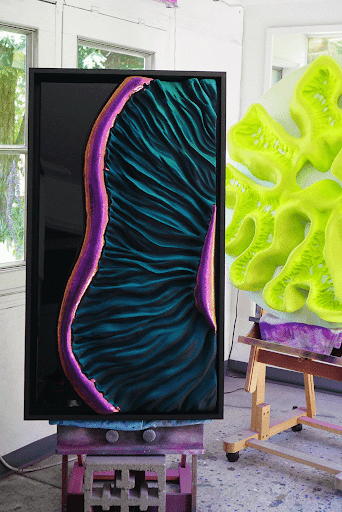
The textures.
The colours.
The constrasts.
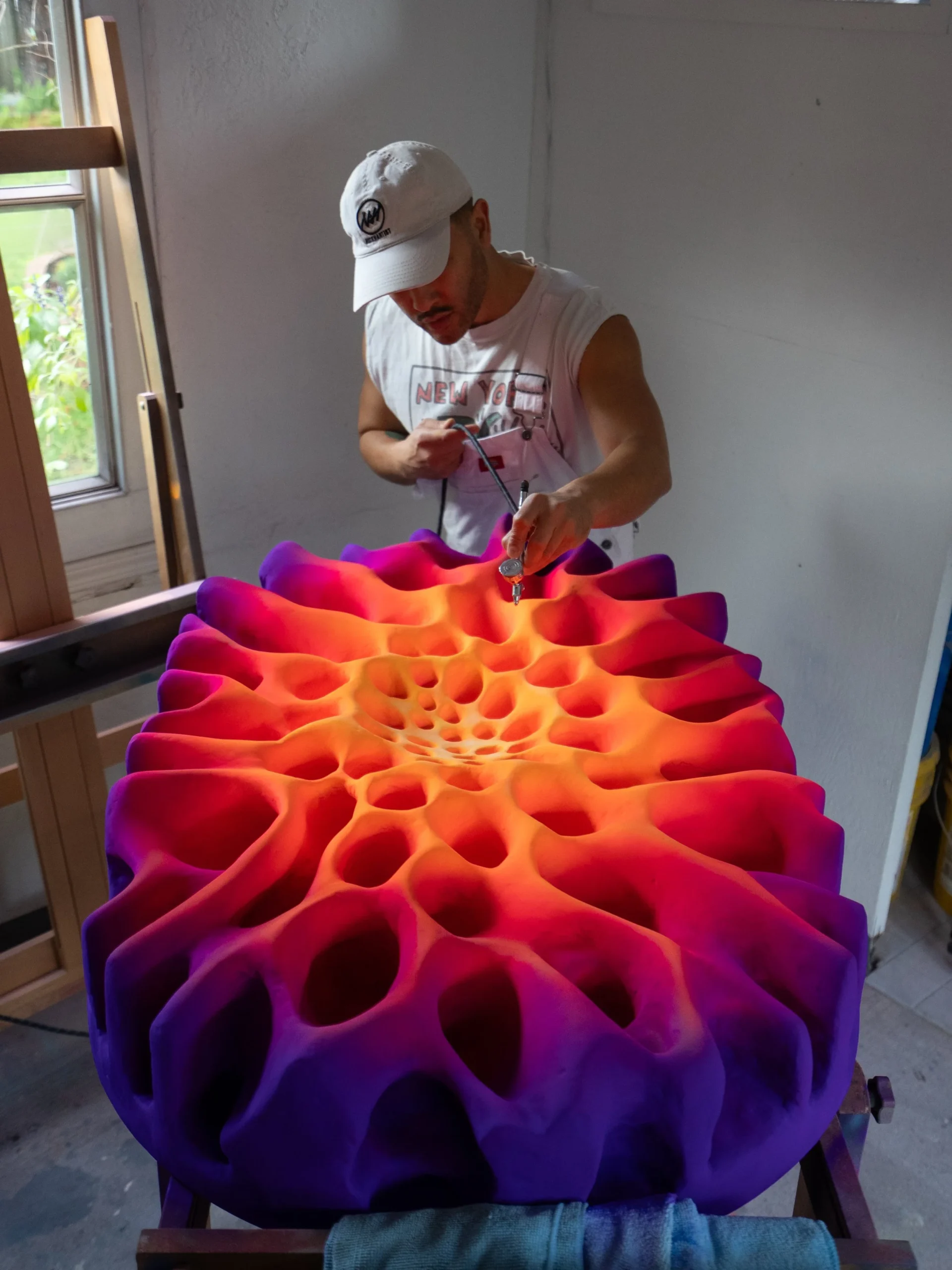
Nicholas Hernandez is a contemporary abstract and textural artist based in Sacramento, California. Before committing fully to fine art, he studied Art and Graphic Design. Go check his work, his pieces are incredible.
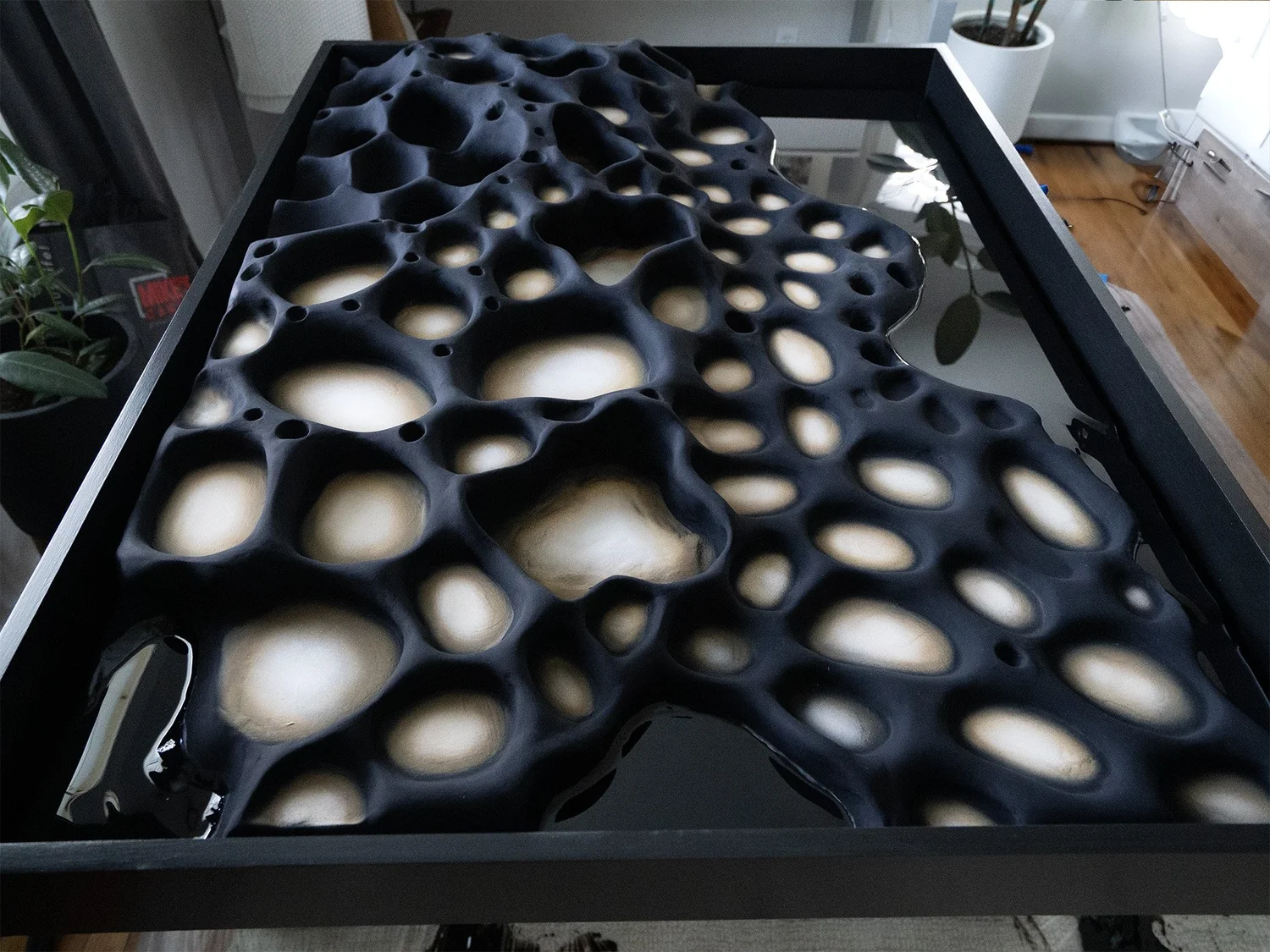
In his words, his works aren’t “just paintings.” They’re abstract relief sculptures — textured surfaces layered with depth, ridges, valleys, and organic formations that seem to breathe with light.
Not the kind you see — the kind you feel.
It’s no secret that my art is heavily inspired by other artists that have inspired me.
When I first stumbled upon the work of Nicholas Hernandez, better known in the art world as Nickhartist, I wasn’t searching for a new direction. I wasn’t looking for a mentor. I wasn’t even looking for inspiration. I was just scrolling, drifting through images like any other day.
And then his artwork stopped me cold.
Well of course like any art it will influence individuals in very different ways. For me however, what drew me in first wasn’t the color. It wasn’t the composition. It was the texture — the way his surfaces seem alive, shifting depending on light and angle. Texture isn’t just something he uses; texture is the language.
Before seeing this, I was mainly using canvases.
But I actually stopped making art for years, simply because I got bored with the actual canvases. It didnt excite me anymore and just felt boring. This is why when I found this artist, it sparked that curiosity again and I was hooked ever since. The feeling of nature — glacial caves, volcanic rock, lava formations, hot-springs minerals, underground tunnels of color and earth. His pieces feel ancient and futuristic at the same time, like memories you’ve never lived.
I was officially done with flat surfaces since that day!
My point is this:
You’re allowed to begin again.
How His Work Influenced Me — And Why That’s Okay
Some people fear being influenced by other artists.
They worry it makes them unoriginal.
They worry it makes them less authentic.
But the truth is this:
We all learn through influence.
We all start by following something that sparks us.
We all grow from what moves us.
Seeing Nicholas Hernandez’s work gave me permission to explore something I had never tried before: deep, expressive, abstract texture. His art didn’t make me want to copy him — it made me want to experiment, to explore, to push the limits of materials and emotion in my own way.
Originality is not about isolation
It’s about interpretation.
It’s about evolution.
It’s about taking what inspires you and turning it into something only you could create.
The Message I Want to Share
If you’re an artist — or just someone trying to find your creative voice — here’s what I learned through discovering his work:
It is absolutely okay to be influenced by art that already exists.
It doesn’t make you less original.
It doesn’t make you a copycat.
Influence is how we grow, how we discover new passions, and how we eventually develop a voice that’s entirely our own.
Nicholas Hernandez didn’t just inspire me to try a new style.
He taught me that following inspiration is not imitation —
it’s the path toward authenticity.
And sometimes, the art that changes you is the art that gives you permission to change yourself.