Imagine trying to build a life as an artist in the 1950s.
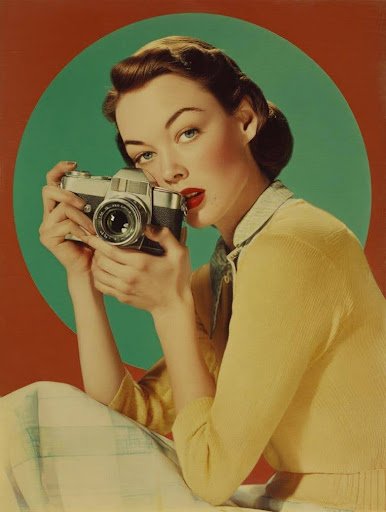
Your work lives or dies by geography. If you are not physically close to galleries, institutions, or the right people, your art may never leave your studio. Ideas travel slowly. Inspiration comes from books, limited exhibitions, or word of mouth. If your work does not fit neatly into the dominant styles of the time, it risks being dismissed before it is even understood. Talent alone is not enough—you must exist in the right place, at the right moment, and within the right system.
Now imagine being an artist today.
Ideas move at the speed of thought. A concept can be sketched digitally, modeled in three dimensions, tested in a virtual space, and shared across the world before the first physical material is ever touched. Technology is no longer external to art—it is embedded in how contemporary work is conceived, refined, and experienced. Artificial intelligence, digital modeling, projection mapping, and augmented reality have expanded not only what art can look like, but how it can come into being.
This shift has fundamentally changed the role of the artist. While AI-generated art often dominates headlines, its real impact is not about replacement—it is about collaboration. Many contemporary artists use AI and digital tools as creative partners, exploring pattern, structure, and possibility before translating those ideas into physical, tactile works. What emerges is a balance between machine precision and human intuition, where technology becomes a framework rather than a final voice.
For me, this intersection of structure and creativity feels natural.
Before becoming a full-time artist, I was an accountant—trained to understand systems, patterns, and long-term thinking. That background still informs how I work today. Art, for me, has always lived alongside logic. Technology became the bridge between those worlds, allowing analytical thinking and emotional expression to coexist within the same creative process.
Place has also shaped how I approach art and technology. Growing up in Halifax, Nova Scotia, I was surrounded by texture—weathered surfaces, shifting light, and environments shaped by time. Later, living in Toronto exposed me to scale, speed, and constant digital momentum. Then, in Dammam, Saudi Arabia, space itself became the dominant language—vast, architectural, intentional. Each place altered how I think about form, movement, and presence.
Technology was the constant that allowed these experiences to translate into my work.
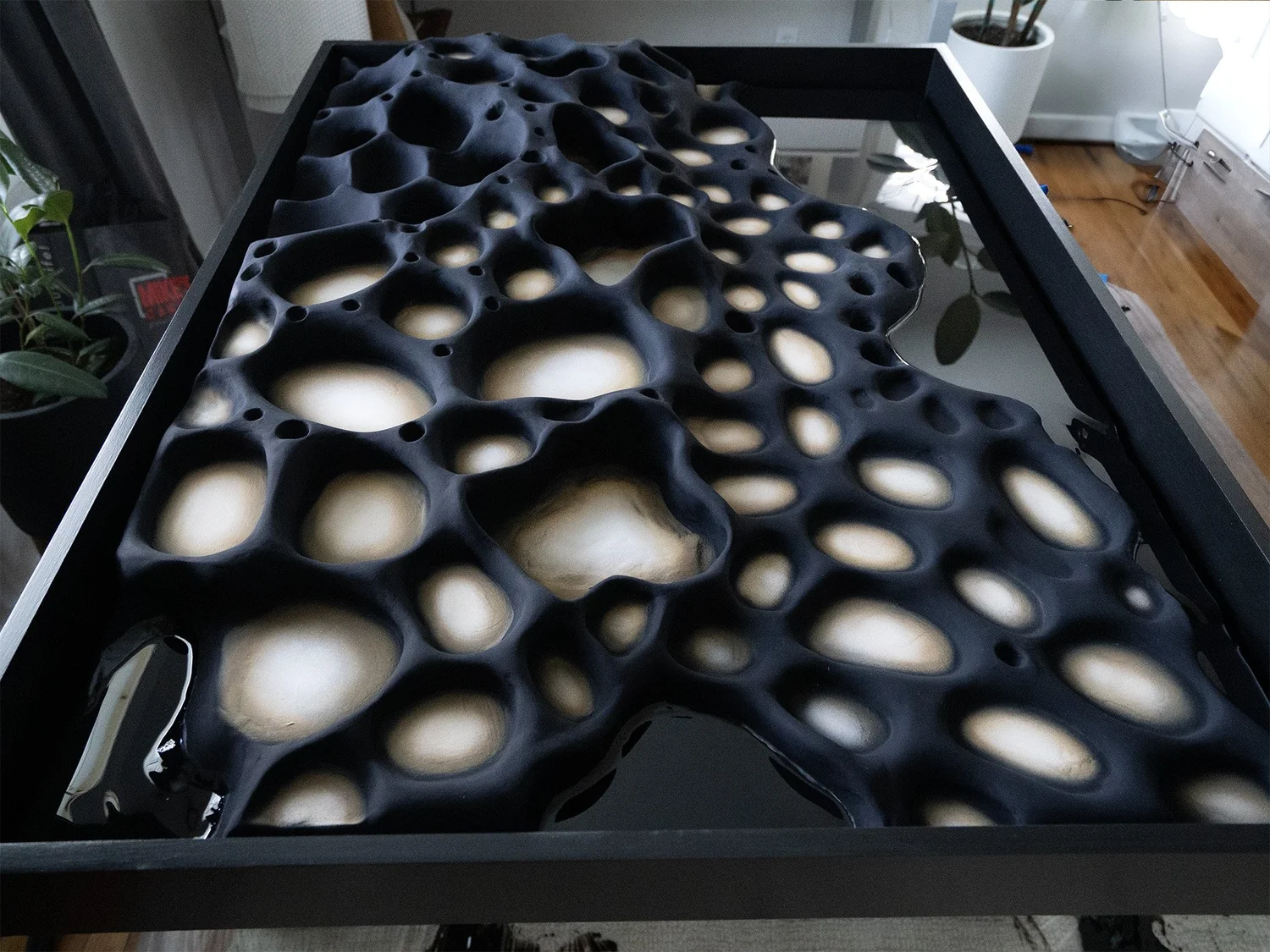
In my 3D sculpture and mural practice, digital tools operate quietly behind the scenes. I use technology to sketch ideas, explore spatial relationships, and experiment with scale long before materials are applied. This process allows me to push boundaries without losing intention. Large-scale murals, in particular, benefit from digital visualization, enabling clients to see how color, texture, and dimensional elements will interact with architecture, light, and movement within a space.
Yet despite all this innovation, what audiences care about most has not changed.
People are not looking for art that feels mechanical. They are drawn to work that carries a human pulse—imperfections, emotion, and intuition. The most compelling contemporary art uses technology not to dominate the process, but to support it. The goal is not perfection, but presence.
This fusion of technology and humanity resonates deeply with collectors, designers, and commercial clients seeking art that feels both current and timeless. Work that acknowledges the digital world we live in, while remaining grounded in physicality and emotional depth.
Technology is not the future of art—it is the present language of creative possibility. And like any language, its power lies not in the tool itself, but in the story it helps tell.